Showing posts with label Sanjeevan. Show all posts

Monday, 27 October 2014

Incident Of MH370

Malaysia Airlines Flight 370 (MH370] was a scheduled international passenger flight that disappeared on Saturday, 8 March 2014, while flying from Kuala Lumpur International Airport, Malaysia to Beijing Capital International Airport, People's Republic of China. Air traffic control received the aircraft's last message at 01:20 MYT (17:20 UTC, 7 March)[b] when it was over the South China Sea, less than an hour after takeoff. It was last plotted by military radar at 02:15 over the Andaman Sea, 320 kilometres (200 mi) northwest of Penang state in northwestern Malaysia.[4] At 07:24, Malaysia Airlines (MAS) reported the flight missing. The aircraft, a Boeing 777-200ER, was carrying 12 Malaysian crew members and 227 passengers from 15 nations.
A multinational search effort, which became the largest and most expensive in history began in the Gulf of Thailand and the South China Sea, where the flight's signal was lost on secondary surveillance radar, and was soon extended to the Strait of Malacca and Andaman Sea. On 15 March, based on military radar data and transmissions between the aircraft and an Inmarsat satellite, investigators concluded that the aircraft had diverted from its intended course and headed west across the Malay Peninsula, then continued on a northern or southern track for around seven hours.
The focus of the search shifted to the southern part of the Indian Ocean, west of Australia In the first two weeks of April, aircraft and ships deployed equipment to listen for signals from the underwater locator beacons attached to the aircraft's "black boxes". Four unconfirmed signals were detected between 6 and 8 April near the time the beacons' batteries were likely to have been exhausted. A robotic submarine searched the seabed near the detected pings until 28 May, with no debris being found.[19] An analysis of possible flight paths was conducted, identifying a 60,000 km2 (23,000 sq mi) search area, approximately 2,000 km (1,200 mi) west of Perth, Western Australia. The underwater search of this area began on October 5, 2014 and will last up to 12 months at a cost of A$60 million (approximately US$56 million or €41 million).
There has been no confirmation of any flight debris and no crash site has been found, resulting in many unofficial theories about its disappearance. The only evidence of the plane's flight path after it disappeared from military radar over the Andaman Sea are communications between the aircraft and a satellite over the Indian Ocean. Analysis of these communications by multiple agencies has concluded that the flight ended in the southern Indian Ocean. On 24 March, the Malaysian government, noting that the final location determined by the satellite communication was far from any possible landing sites, concluded that "flight MH370 ended in the southern Indian Ocean.
At the time of its disappearance, and if the presumption of a loss of all lives aboard can be verified, Flight 370 would have been the deadliest aviation incident in the history of Malaysia Airlines and the deadliest involving a Boeing 777. Flight 370 was surpassed in both regards just 131 days later by the crash of another Malaysia Airlines Boeing 777, Flight 17, that was shot down over Ukraine on 17 July 2014, killing all 298 people aboard.


Flight 370 was a scheduled red-eye flight in the early morning hours of 8 March 2014 from Kuala Lumpur, Malaysia to Beijing, China. It was one of two daily flights operated by Malaysia Airlines from their hub at Kuala Lumpur International Airport (KLIA; IATA code: KUL) to Beijing Capital International Airport (IATA code: PEK)—scheduled to depart at 00:35 local time (MYT; UTC+8:00) and arrive at 06:30 local time (CST; also UTC+8:00).

At 00:41 MYT, Flight 370 took off from runway 32R. Less than a minute after take off, Flight 370 was cleared by air traffic control (ATC) to climb to flight level 180[c]—an altitude which corresponds to 18,000 feet (5,500 m) based on atmospheric pressure—on a direct path to waypoint IGARI and transferred from the airport's air traffic control to "Lumpur Radar" air traffic control on frequency 132.6 MHz. Air traffic control over peninsular Malaysia and adjacent waters is provided by the Kuala Lumpur Area Control Center (ACC); Lumpur Radar is the name of the frequency used for en route air traffic. Lumpur Radar cleared Flight 370 to flight level 350[c]—35,000 ft (10,700 m) based on atmospheric pressure. At 1:01, Flight 370's crew reported to Lumpur Radar that they had reached flight level 350, which they confirmed again at 1:08
The aircraft's final automated position report and last message using the Aircraft Communications Addressing and Reporting System (ACARS) protocol was sent at 01:07 MYT. The final verbal contact with air traffic control occurred at 1:19 MYT, when one of the aircraft's pilots acknowledged a send-off by Lumpur Radar to Ho Chi Minh ACC
[Lumpur Radar] "Malaysian three seven zero, contact Ho Chi Minh one two zero decimal nine. Good night."
 
[Flight 370] "Good night. Malaysian three seven zero."
The crew was expected to contact air traffic control in Ho Chi Minh City as the aircraft passed into Vietnamese airspace, just north of the point where contact was lost. The captain of another aircraft attempted to reach the crew of Flight 370 "just after 1:30 am" using the International distress frequency to relay Vietnamese air traffic control's request for the crew to contact them; the captain said he was able to establish contact, but just heard "mumbling" and static. Calls made to Flight 370's cockpit at 02:39 MYT and 07:13 MYT were unanswered but acknowledged by the aircraft's satellite data unit.
At 1:21:04, Flight 370 was observed on radar at the Kuala Lumpur ACC as it passed the navigational waypoint IGARI in the Gulf of Thailand. At 1:21:13, Flight 370 disappeared from the radar screen at Kuala Lumpur and was lost about the same time on radar at Ho Chi Minh ACC, which claims the plane was at the nearby waypoint BITOD.[36] Air traffic control uses secondary radar, which relies on a signal emitted by a transponder on aircraft; therefore, after 1:21 the transponder on Flight 370 was no longer functioning. The final data from the transponder indicated the plane was flying at its assigned cruise altitude of flight level 350[c] and was travelling at 471 knots (872 km/h; 542 mph) true airspeed.[44]

The aircraft made a sharp turn westwards and headed towards a waypoint called VAMPI in the Strait of Malacca.[45] Soon after the turn, military radar suggests the aircraft climbed to 45,000 ft (14,000 m)—above the aircraft's 43,100 ft (13,100 m) approved flight ceiling—then descended unevenly to 23,000 ft (7,000 m) as it approached Penang Island. A source close to the investigation told media that the aircraft descended as low as 12,000 feet (3,700 m).[47] From there, the aircraft flew across the Strait of Malacca to or close to the waypoint VAMPI, after which the plane flew along air route N571 to waypoints MEKAR, NILAM, and possibly IGOGU.The last known location, from and near the limits of Malaysian military radar, was 200 nautical miles (370 km; 230 mi) northwest of Penang at an altitude of 29,500 ft (9,000 m)

Because of the sensitive nature of revealing military radar capabilities, countries in the region where Flight 370 disappeared have been reluctant to release information they may have collected from military radar. The only nation besides Malaysia to claim tracking Flight 370 is Thailand. Despite possibly flying near or over the northern tip of Sumatra,Indonesia—which has an early warning radar system—has publicly denied sighting Flight 370 on radar. No radar contact was detected by Australia, including their JORN over-the-horizon radar system, which was believed to be looking north to detect illegal migrants and not west over the Indian Ocean where Flight 370 is presumed to have flown based on satellitAt 02:25:27 MYT, the aircraft's satellite communication system sent a 'log-on request' message—the first message on the system since the ACARS transmission at 01:07 MYT—which was relayed by satellite to a ground station, both operated by satellite telecommunications company Inmarsat. After logging on to the network, the satellite data unit aboard the aircraft responded to hourly status requests from Inmarsat and two ground-to-aircraft phone calls, at 02:39 MYT and 07:13 MYT, which went unanswered by the cockpit. The final status request and aircraft acknowledgement occurred at 08:10 MYT. The aircraft sent a log-on request at 08:19:29 MYT which was followed, after a response from the ground station, by a 'log-on acknowledgement' message at 08:19:37 MYT. The log-on acknowledgement is the last piece of data available from Flight 370. The aircraft did not respond to a status request from Inmarsat at 09:15 MYT.

At 1:30, the captain of another aircraft attempted to reach the crew of Flight 370 on the International distress frequency to relay Vietnamese air traffic control's request for Flight 370 to contact them; the captain said he was able to establish contact, but just heard "mumbling" and static. At 1:38, Ho Chi Minh Area Control Centre (ACC) contacted Kuala Lumpur Area Control Centre to query the whereabouts of Flight 370 and informed them that they had not established verbal contact with Flight 370, which last spotted by radar at waypoint BITOD. The two centres exchanged four more calls over the next 20 minutes with no new information.
 
At 2:03, Kuala Lumpur ACC relayed to Ho Chi Minh ACC information received from Malaysia Airlines' operations centre that Flight 370 was in Cambodian airspace. Ho Chi Minh ACC contacted Kuala Lumpur ACC twice in the following eight minutes asking for confirmation that Flight 370 was in Cambodian airspace. At 2:15, the watch supervisor at Kuala Lumpur ACC queried Malaysia Airlines' operations centre, who said that they could exchange signals with Flight 370 and that Flight 370 was in Cambodian airspace.[53] Kuala Lumpur ACC contacted Ho Chi Minh ACC to query that the planned flight path for Flight 370 passed through Cambodian airspace. Ho Chi Minh ACC responded that Flight 370 was not supposed to enter Cambodian airspace and that they had already contacted Phnom Penh ACC (which controls Cambodian airspace), which had no contact with Flight 370.[36] Kuala Lumpur ACC contacted Malaysia Airlines' operations centre at 2:34, inquiring about the communication status with Flight 370. The operations centre initially responded that they were unsure whether a message to the aircraft was sent successfully, but two minutes later said that Flight 370 was in a normal condition based on a signal download and that it was located at 14°54′00″ N, 109°15′00″E.[36][53] Malaysia Airlines Flight 386 was requested by Ho Chi Minh ACC to attempt to contact Flight 370 on the Lumpur Radar frequency—the frequency on which Flight 370 last made contact with Malaysian air traffic control—and on emergency frequencies, but without success.

At 3:30, Malaysia Airlines' operations centre informed Kuala Lumpur ACC that the locations they had provided earlier were "based on flight projection and not reliable for aircraft positioning."[36] Over the next hour, Kuala Lumpur ACC contacted Ho Chi Minh ACC asking whether they had contacted Chinese air traffic control. At 5:09, Singapore ACC was queried for information about Flight 370. At 5:20, an undisclosed official—identified in the preliminary report released by Malaysia as "Capt [name redacted]"—contacted Kuala Lumpur ACC requesting information about Flight 370; he opined that, based on known information, "MH370 never left Malaysian airspace

The watch supervisor at Kuala Lumpur ACC activated the Kuala Lumpur Aeronautical Rescue Coordination Centre (ARCC) at 5:30, over four hours after communication was lost with Flight 370 The ARCC is a command post at an Area Control Centre that coordinates search-and-rescue activities when an aircraft is lost.
Malaysia Airlines issued a media statement at 07:24 MYT, one hour after the scheduled arrival of the flight at Beijing, stating that contact with the flight had been lost by Malaysian ATC at 02:40 MYT; the time when contact was lost was later corrected to 1:21. Malaysia Airlines stated that the government had initiated search and rescue operations.Neither the crew nor the aircraft's communication systems relayed a distress signal, indications of bad weather, or technical problems before the aircraft vanished from radar screens.


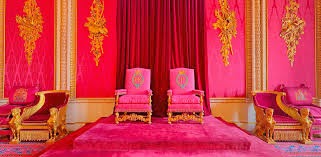
Buckingham palace, The Most Beautiful Palace

1. Buckingham Palace is The Queen's official London residence, but St. James's Palace is the ceremonial Royal residence. Even today foreign ambassadors are formally accredited to 'the Court of St. James's'.

2. Buckingham Palace has 775 rooms. These include 19 State rooms, 52 Royal and guest bedrooms, 188 staff bedrooms, 92 offices and 78 bathrooms.

3. Vital statistics: Buckingham Palace is 108 metres long across the front, 120 metres deep (including the quadrangle) and 24 metres high. The total floor area of the Palace, from basement to roof, covers over 77,000 square metres.

4. The site where Buckingham Palace now stands was originally a mulberry garden planted by King James I (r. 1603-25) to rear silkworms. Unfortunately, he chose the wrong kind of mulberry bush, and silk production never took off in Britain.

5. Buckingham Palace gets its name from an eighteenth-century Tory politician. John Sheffield, 3rd Earl of Mulgrave and Marquess of Normanby, was created Duke of Buckingham in 1703. He built Buckingham House for himself as a grand London home.

6. In 1761, George III bought Buckingham House for his wife, Queen Charlotte, to use as a comfortable family home close to St James's Palace. Buckingham House became known as the Queen's House, and 14 of George III's 15 children were born there.

7. Buckingham House was transformed into Buckingham Palace in the 1820s by the architect John Nash for George IV. But the first monarch to use Buckingham Palace as their official residence was Queen Victoria, who moved there in 1837. The previous monarch - William IV - had preferred to live at Clarence House and to use St. James's Palace for State functions.

8. Buckingham Palace is an office for the Head of State, as well as a home for The Queen. Today over 800 members of staff are based at Buckingham Palace. Their jobs range from housekeeping to horticulture, catering to correspondence. Some of the more unusual jobs include fendersmith, clockmaker and flagman.

9. The forecourt of Buckingham Palace, where Changing the Guard takes place, was not created until 1911, when it was added as part of a scheme to commemorate Queen Victoria. The gates and railings were also completed in 1911.

10. The Palace gained its familiar white Portland stone facade in 1913, because the original soft French stone had decayed due to pollution. Architect Sir Aston Webb created the new design. People at the time were surprised by the transformation of the front from grimy black to gleaming white.

11. The balcony of Buckingham Palace is one of the most famous in the world. The first recorded Royal balcony appearance took place in 1851, when Queen Victoria stepped onto it during celebrations for the opening of the Great Exhibition. It was King George VI who introduced the custom of the RAF fly-past at the end of Trooping the Colour, when the Royal Family appear on the balcony.

12. The east side of the Palace (today's front wing) was the last to be built. Queen Victoria had it added in the 1840s to provide extra space for her growing family. The new wing meant that the monument known as Marble Arch, originally at the entrance to Buckingham Palace, had to be moved to its present site near Speaker's Corner in 1851.

13. Buckingham Palace provided an unlikely operating theatre for King Edward VII in 1902. Suffering from peritonitis and close to death, he was operated on in a room overlooking the garden. The surgery proved a success, and King Edward VII was crowned at Westminster Abbey in August that year.

14. There are 1,514 doors and 760 windows in Buckingham Palace. All windows are cleaned every six weeks to keep them clean.

15. Electricity was first installed in the Ball Room of Buckingham Palace in 1883, and between 1883 and 1887 electricity was extended throughout the Palace. Today there are over 40,000 light bulbs in the Palace.

16. Some rooms at Buckingham Palace have a Chinese theme. That is because they feature furniture and décor which were originally based in the Prince Regent's oriental-style Royal Pavilion at Brighton (later sold by Queen Victoria to fund building work at Buckingham Palace).

17. Buckingham Palace's garden covers 40 acres, and includes a helicopter landing area, a lake, and a tennis court. It is home to 30 different species of bird and more than 350 different wild flowers, some extremely rare. As well as being the venue for summer garden parties, it has been the setting for a charity tennis competition (2000), pop and classical music concerts (2002) and a children's party featuring a host of characters from children's books (2006).

18. The only monarch to be born and die at Buckingham Palace was Edward VII (born 1841, died 1910). William IV was also born at Buckingham House. The Queen gave birth to Prince Charles and Prince Andrew at Buckingham Palace. Notice of Royal births and deaths is attached to the railings at Buckingham Palace for members of the public to read. This custom is still followed - even in the age of mass media, when Royal births and deaths are also announced on the Royal web site.

19. In 1914 suffragettes seeking votes for women took their campaign to Buckingham Palace. Two women chained themselves to the Palace railings, whilst others attempted to storm the Palace to deliver their 'Votes for Women' petition.

20. During the Second World War, Buckingham Palace suffered nine direct bomb hits. On several occasions King George VI and Queen Elizabeth were in the Palace and narrowly escaped being killed. One person did die during the wartime bombing: PC Steve Robertson, a policeman on duty at the Palace, was killed by flying debris on 8 March 1941 when the north side of the Palace was wrecked. A plaque inside the garden commemorates his heroism.

21. Environmental issues are a major concern in the running of Buckingham Palace. A Combined Heat and Power unit (CHP) helps to cut energy consumption; LED lights reduce electricity use; and double-glazed skylights reduce energy loss. In the garden, 99% of green waste is recycled on site.

22. Four Royal babies - The Prince of Wales, The Princess Royal, The Duke of York and Prince William - were christened by the Archbishop of Canterbury in the Music Room of Buckingham Palace.

23. A flag always flies above Buckingham Palace. When The Queen is in residence, the Royal Standard flies. When the Sovereign is not present, the Union Flag flies instead. A flag serjeant has the role of raising and lowering the right flag as The Queen arrives at or departs from the Palace.

24. Buckingham Palace has its own chapel, post office, swimming pool, staff cafeteria, doctor's surgery and cinema.

25. Although Buckingham Palace is well known, it still has a postcode: SW1A 1AA. It is the only building to have this postcode although the House of Commons has a similar one - SW1A 0AA.

26. There are more than 350 clocks and watches in Buckingham Palace, one of the largest collections of working clocks anywhere. Two full-time horological conservators wind them up every week and keep them in good working order.

27. Changing the Guard takes place on the forecourt of Buckingham Palace at 11.30am (on alternate days during autumn and winter). In this ceremony the soldiers who have been on duty at Buckingham Palace and St. James's Palace are relieved by the 'New Guard'. A military band plays music, which ranges from military marches to Abba's greatest hits. On Royal birthdays the band plays 'Happy Birthday'.

28. One regular ritual which most tourists do not see is the daily 'dragging' of the gravel on the forecourt of Buckingham Palace. It is cleaned and combed using mechanical equipment first thing daily - even on Christmas Day. Later in the day two more inspections take place just in case there is any rubbish to clear away. This helps to ensure that the forecourt always looks spick and span.

29. The largest room in the Palace is the Ballroom, where Investitures and State banquets take place today. It is 36.6m long, 18m wide and 13.5m high. It was opened in 1856 with a ball to celebrate the end of the Crimean War.

30. Crowds often gather around Buckingham Palace for occasions of national celebration. At the end of World War II, hundreds of thousands cheered King George VI and Winston Churchill on the balcony. To mark The Queen's Golden Jubilee in 2002, over one million people crowded into the area in front of the Palace and down the Mall.

31. The 1st Buckingham Palace Guide Company was formed in 1937 when Princess Elizabeth enrolled as a Girl Guide. The pack included some 20 Guides and fourteen Brownies: children of Royal Household members and Palace employees. They made a summerhouse in the garden their headquarters but, with the outbreak of the Second World War, the Company was closed down.

32. Dress codes at Buckingham Palace have changed greatly over two centuries. In 1924 Labour Prime Minister Ramsay MacDonald was the first man to be received by a monarch inside Buckingham Palace wearing a lounge suit, but, this was a one-off. Evening court dress remained obligatory until the Second World War. Today there is no official dress code. Most men invited to Buckingham Palace in the daytime choose to wear service uniform or lounge suits.

33. Visiting heads of state occupy a suite of rooms at the Palace known as the Belgian suite, on the ground floor of the North-facing garden front. These rooms were first decorated for Prince Albert's uncle Léopold I, first King of the Belgians. King Edward VIII also lived in these rooms during his short reign.

34. Buckingham Palace is not the private property of the Queen as an individual, to dispose of as she wishes. Like Windsor Castle and the Palace of Holyroodhouse, Buckingham Palace is held by The Queen as Sovereign.

35. John Nash, the architect responsible for remodelling many of today's Buckingham Palace interiors, also built the Royal Mews, All Soul's Church Langham Place, Regent Street and Carlton House Terrace, and redesigned the Haymarket Theatre.

36. Hundreds of distinguished historic figures have visited Buckingham Palace since it became the Sovereign's London residence. They have included a seven-year-old Wolfgang Amadeus Mozart (when it was still Buckingham House); Felix Mendelssohn; Johann Strauss the Younger; Charles Dickens; Alfred Lord Tennyson; American Presidents including Woodrow Wilson and JF Kennedy; Mahatma Gandhi (who wore a loin cloth and sandals to tea with King George V); first man on the moon Neil Armstrong; actor Laurence Olivier; and Nelson Mandela.

37. Buckingham Palace is not only The Queen's London home: The Duke of Edinburgh, The Duke of York, The Earl and Countess of Wessex, The Princess Royal and Princess Alexandra also have private offices and apartments located within the Palace.

39. More than 50,000 people visit the Palace each year as The Queen's guests at banquets, lunches, dinners, receptions and garden parties. The Buckingham Palace kitchen is able to serve a sit-down meal to as many as 600 people at a time. Since 1993, the State Rooms of the Palace have also been open to members of the public to visit during August and September, while The Queen is not in residence.

40. The Queen's regular audiences with the British Prime Minister traditionally take place at Buckingham Palace in The Queen's Audience Room. During the war, King George VI's audiences with Winston Churchill were less formal - the two helped themselves to food from a buffet before sitting down to talk in privacy


World Most Expensive Home

In 2011 it was reported that Ambani had yet to move in to the home, despite its completion, for fear of "bad luck. According to Basannt R. Rasiwasia, an expert in Vastu shastra, claims the home does not conform to Vastu requirements. However, Ambani later confirmed that his family had been living there since about September, 2011.
Indian media has frequently reported that Antilia is the world's most expensive home costing between US$1 and 2 billion Thomas Johnson, director of marketing at architecture firm Will and Hirsch Bedner Associates that was consulted with by Reliance during building floor plan design, was cited by Forbes Magazine as estimating the cost of the residence at nearly $2 billion. In June 2008, a Reliance spokesman told The New York Times that it would cost $50–$70 million to build.